
Content validation. An end to false positives.
A "200 OK" doesn't mean your client's site works. The content validation engine checks that the business logic is actually there, from the "add to cart" button to dynamic database content. So you catch the silent failure a simple ping misses.
Made and Hosted in the
European Union
GDPR-Compliant Hosting
in Germany
GEO-Redundant Replica
across the EU
Look beneath the surface. Check the content.
Don't just check whether the server is awake. Check whether it's telling the truth. You monitor specific strings like "success" or "welcome" to confirm critical user paths are live, and you alert on "error", "database connection failed" or "404". That's how you catch the silent crash on a seemingly working page.
- Positive matching, so you confirm the presence of essential elements like a specific heading.
- Negative matching, so an alert fires the moment error messages or broken strings appear.
- Case-sensitive by default, so matching stays precise and predictable.
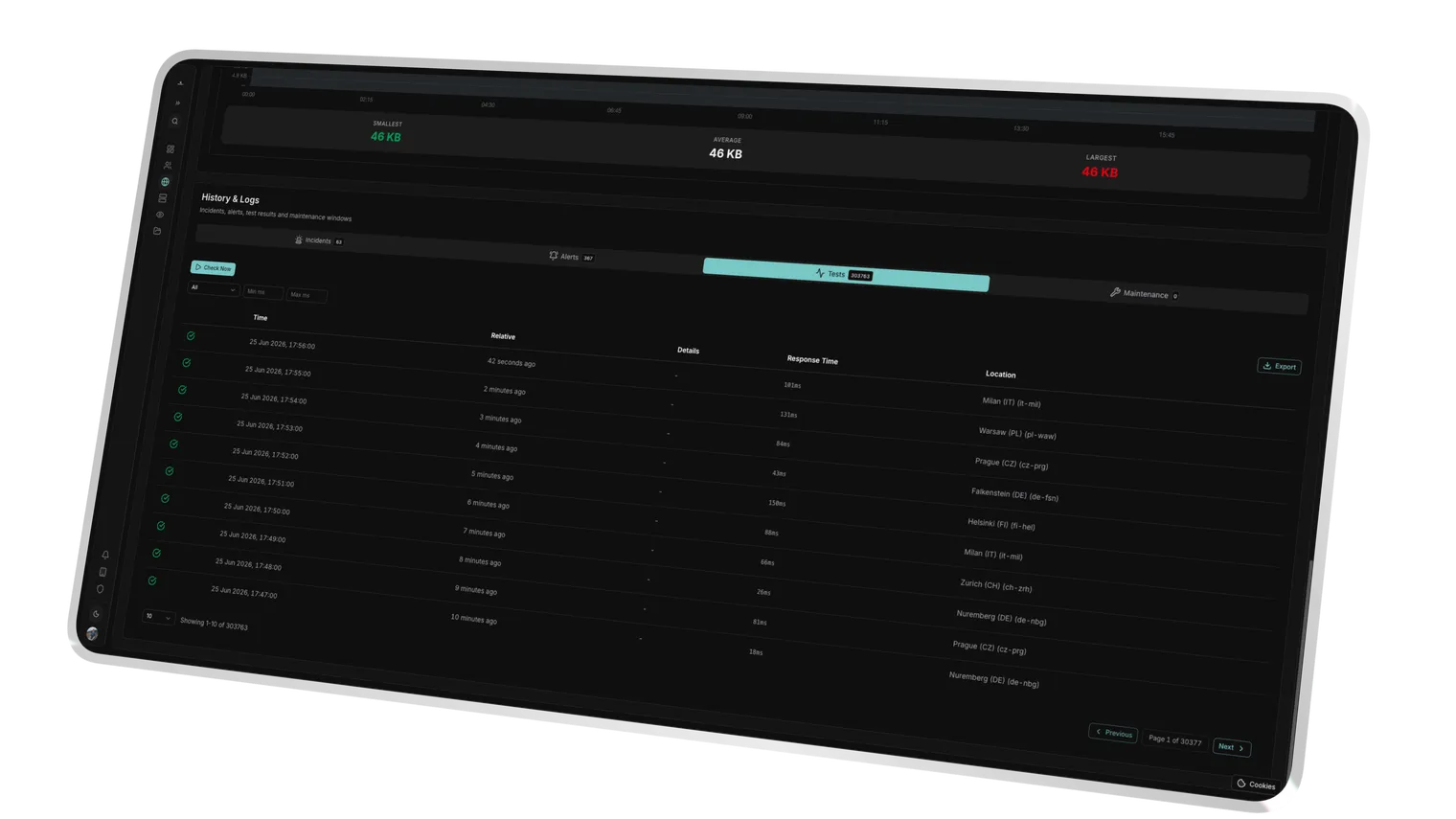
Confirm essential elements like headlines are present.
Alert if error messages or broken strings appear.
No more white screen passing as "OK".
The most dangerous outage is the one that looks "fine" to a ping bot. Content validation analyzes the page response and detects empty renderings or broken CMS layouts, before the embarrassing client call comes. You're the first to know when a plugin update tears apart the frontend.
- Empty-response detection, so an alert fires when the page size drops below your threshold.
- DOM integrity check, so you make sure the critical parts of the HTML structure are delivered.
- Client-first alerting, so you notice before the client does when an update breaks the layout.
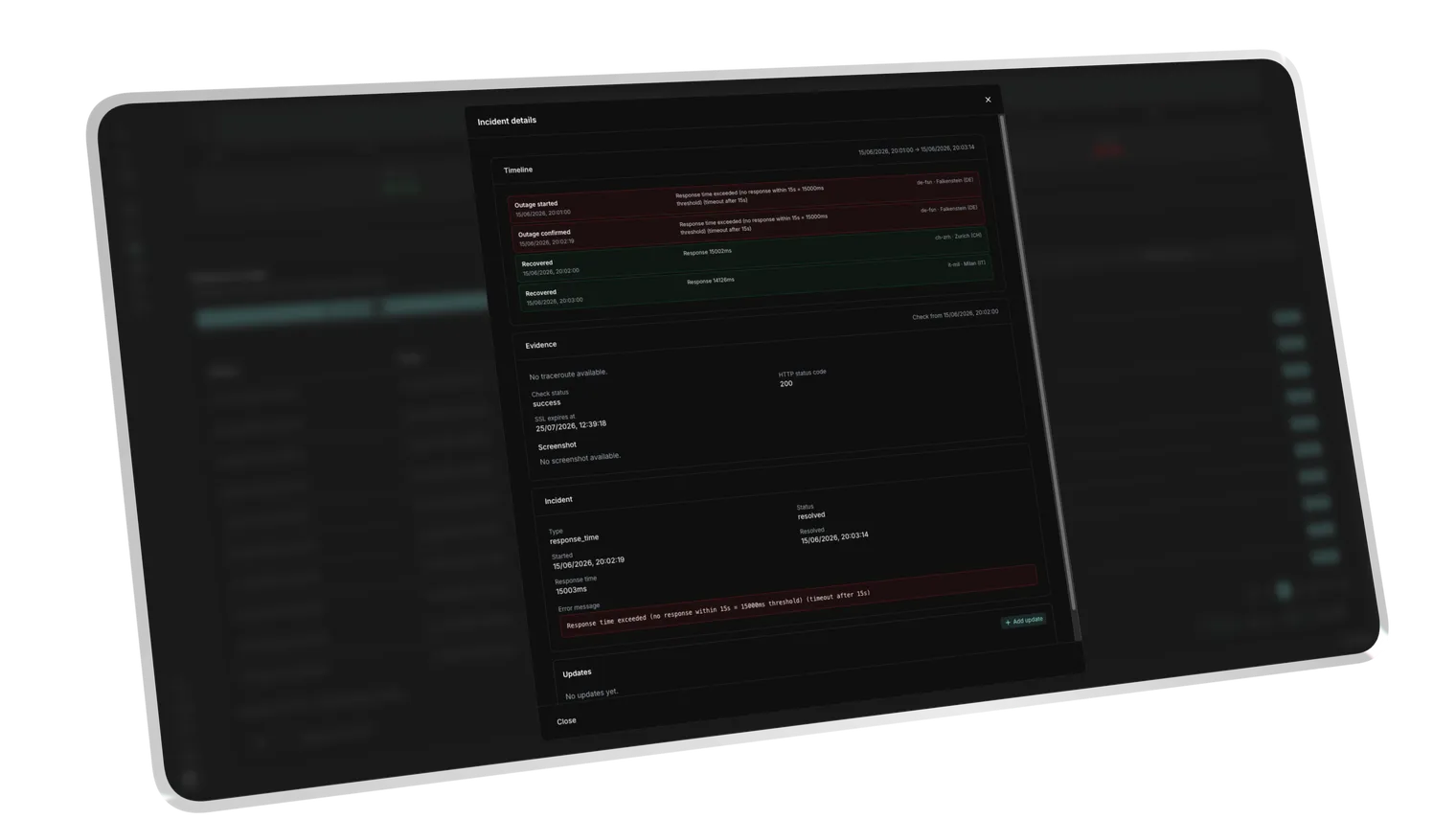
Alert if the page size drops below a threshold.
Critical parts of the HTML structure are delivered.
Catch a plugin update breaking the front-end layout.
Consistency around the globe.
Your content might load perfectly in Frankfurt, and show an error in New York. The global monitoring nodes run content validation from any region you choose, so CDN problems or regional outages don't serve broken pages to your international users without you noticing.
- Region-specific validation, so integrity checks run from multiple global locations.
- CDN error detection, so you spot when edge servers deliver cached error pages.
- Latency vs. integrity, so you see how content presence correlates with response times worldwide.
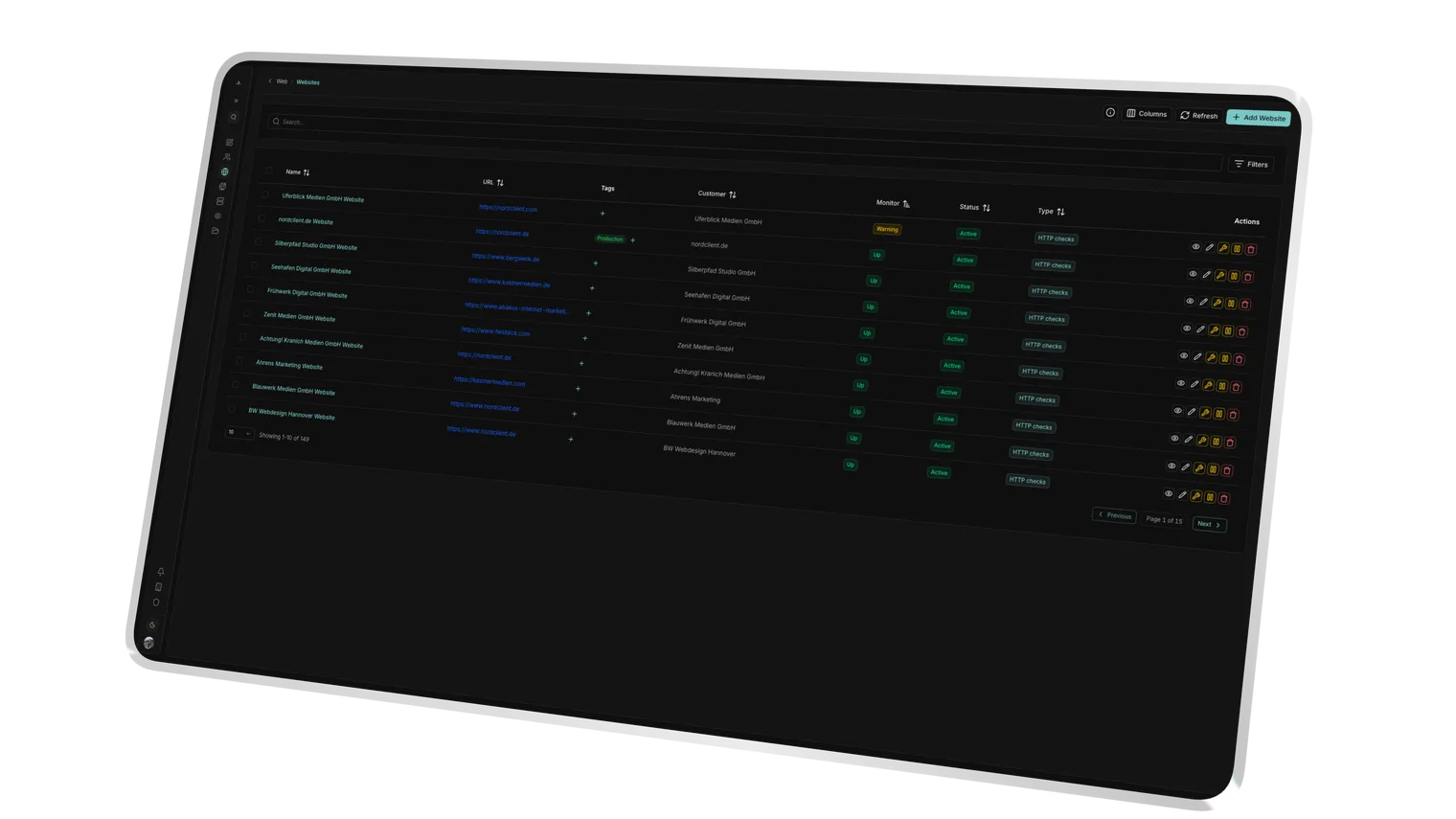
Integrity checks from multiple global locations.
Catch edge servers serving cached error pages.
Content presence correlated with response times.
Success Kit
We don't just monitor. We help you sell.
Every Uptimeify subscription includes access to our Success Kit, a collection of battle-tested resources to turn your monitoring into a profit center.
Service Level Agreement templates to define professional boundaries with your clients.
Find the sweet spot for your care plans. Calculate margins based on check frequency and support hours.
Powerpoint Templates that explain 24/7 monitoring to non-technical clients. Close more retainers.
Use automated reports to proactively communicate value, so clients never ask what they're paying for.
Ready to turn monitoring into a profit center?
Claim your Success Kit and start scaling today.
Frequently Asked Questions
Because the status code only says the server responded, not that the page is right. A page can return "200 OK" and still show "database connection failed" or render empty. Content validation checks the delivered content itself, so you catch the silent failure a ping misses.
With positive matching, you set a required string that must be present (e.g. "add to cart"); if it's missing, there's an alert. With negative matching, you define a forbidden string (e.g. "error" or "404") that triggers an alert the moment it appears. So you confirm the right page is there, and not a broken one.
Yes. The validation checks the page size against a threshold and the presence of critical DOM elements. If the response size collapses or the main container is missing, say, after a faulty plugin update, the check fires, even while the HTTP status still reports "200".
Yes. You choose the regions the content validation runs from. That's how you spot CDN and edge-cache problems affecting only individual locations, a page that loads cleanly in Frankfurt but serves a cached error page in New York gets caught.
Uptimeify is built and hosted in Frankfurt, with a geo-redundant replica across European nodes and without US sub-processors. That minimizes third-country transfer risk and takes a whole discussion off the table in B2B and public-sector conversations.
Ready to see the silent failure before your client calls?
Don't just check whether the server is alive, but whether the page actually works, content, rendering, region by region. Your early-warning system beneath the surface.