
Website monitoring for the whole portfolio. One dashboard, every layer.
From HTTP reachability to the end-to-end checkout flow: watch every layer of your clients' sites in one place, polled from Frankfurt and other EU nodes, branded as your own platform.
Made and Hosted in the
European Union
GDPR-Compliant Hosting
in Germany
GEO-Redundant Replica
across the EU
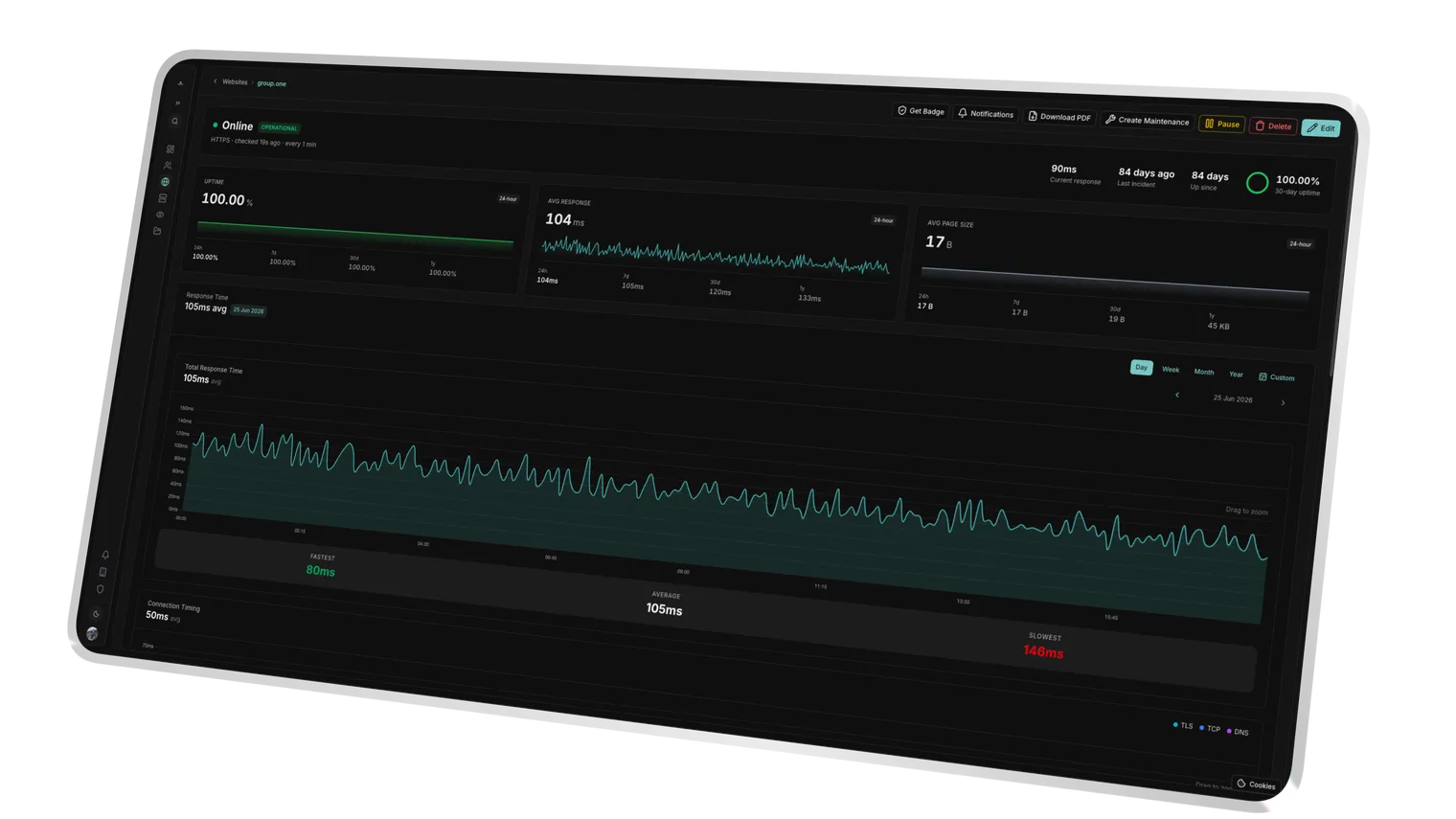
Reachability: before your client even notices.
The uptime check is the foundation of every retainer. High-frequency HTTP/S polling confirms that sites and API endpoints respond, and flags the outage before your client spots it. You're not selling "we ping your site." You're selling the certainty that someone knew first.
- Status-code & redirect validation, so you separate real outages from clean 301/302 chains instead of passing on false alarms.
- Multi-node verification across the EU, so a single network flicker never trips an alert and your client keeps trusting you.
- Custom requests with headers & auth, so you test protected endpoints for real, not just the login wall.
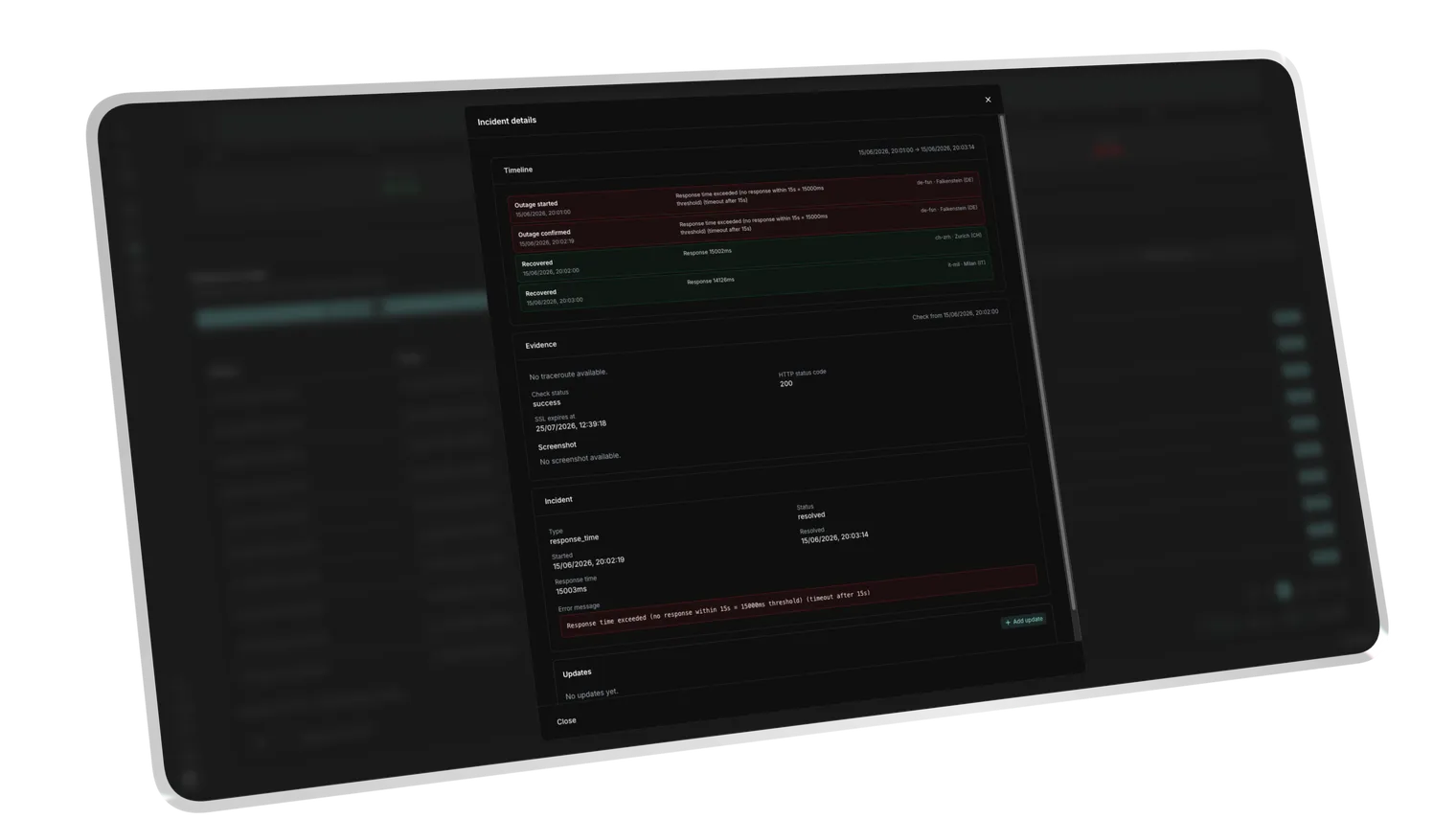
No more "Not Secure" in your client's browser.
An expired certificate costs trust and rankings, and lands as a complaint on your desk. The SSL monitor audits your TLS configuration continuously and warns you while there's still time to act. You go from fire extinguisher to early-warning system.
- Expiry warnings with thresholds, so you renew before the browser complains, not after.
- Trust-chain & intermediate checks, so the chain resolves cleanly in every browser and no half-failures slip through.
- Hostname matching & validity audit, so you can prove the certificate actually belongs to the domain.
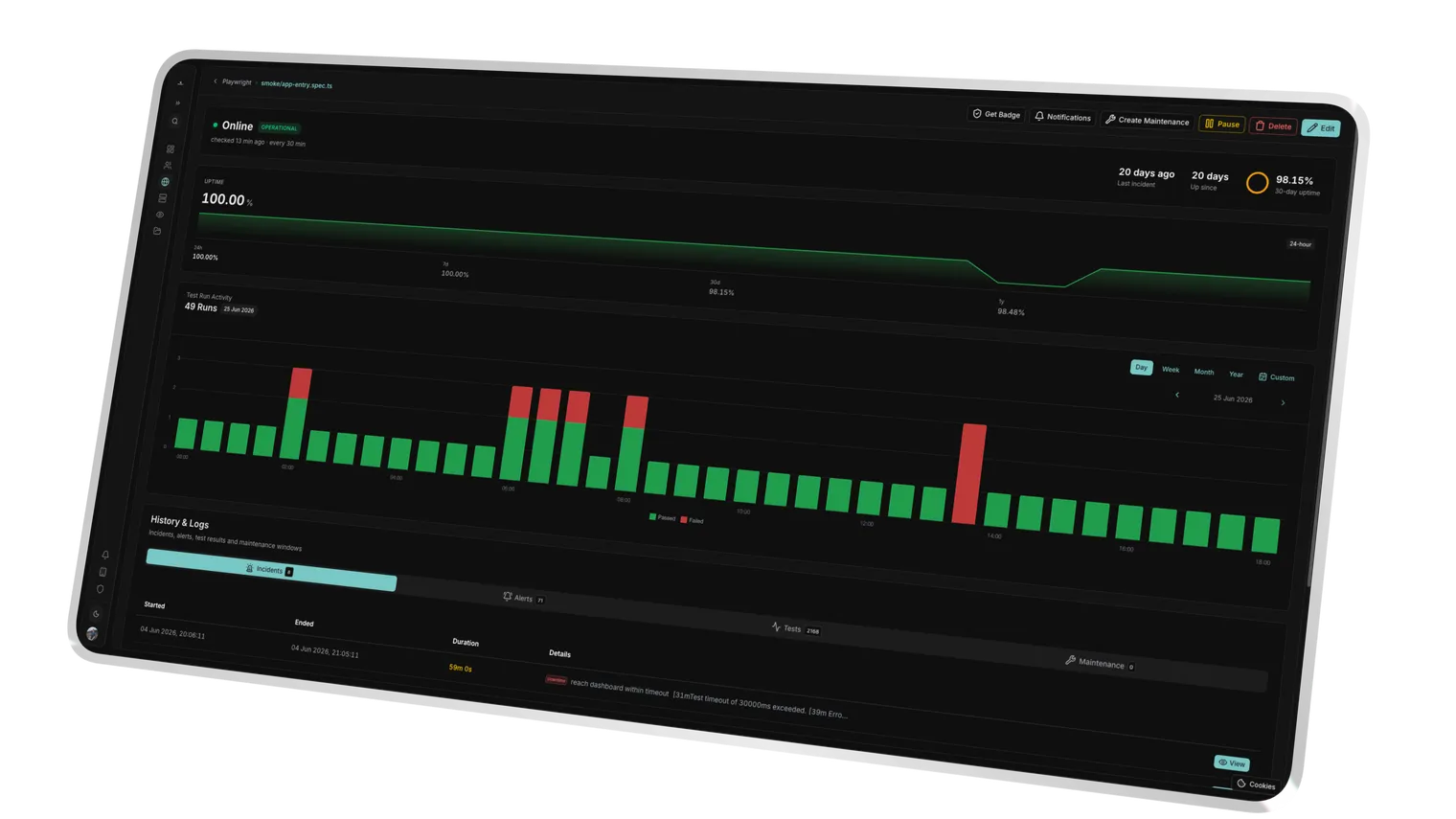
The ping says "online." The checkout says otherwise.
A page can answer 200 OK and still refuse a purchase. Playwright monitoring runs real user journeys in headless Chromium (login, cart, checkout) and surfaces JavaScript errors and UI regressions a simple check never sees. You're not watching the page. You're watching the revenue.
- End-to-end simulation of real flows, so you catch the broken checkout before your client loses sales.
- Secret management for test data, so logins and credentials run reproducibly without sitting in the script.
- Screenshots & step logs on failure, so you show exactly where it broke instead of guessing.
Status 200, wrong content. The most expensive lie in monitoring.
An empty database, a missing footer, an error message that slipped through: the page loads but serves garbage. The keyword monitor scans the DOM and confirms that what must be there really is. That's how you catch the content failure the status code hides.
- "Must contain" checks, so product names, footers or legal disclosures are guaranteed to ship.
- "Must not contain" alerts, so strings like "MySQL Error" or "404" surface instantly, not at the client.
- Regex pattern matching, so you validate dynamic and structured content cleanly too.
What doesn't report didn't run.
Backups, cron jobs and background workers fail quietly. No one notices until the restore fails. Heartbeat monitoring flips the model: your system reports in to us. If the signal goes missing, we raise the alarm. You sell reliability for the things that run out of sight too.
- Inbound signal instead of active polling, so you watch backups, workers and periodic tasks that are invisible from outside.
- Grace periods, so variable runtimes don't trigger false alarms and you flag only real failures.
- Platform-agnostic integration, so a one-line curl or fetch from cron, PowerShell or Node is enough.
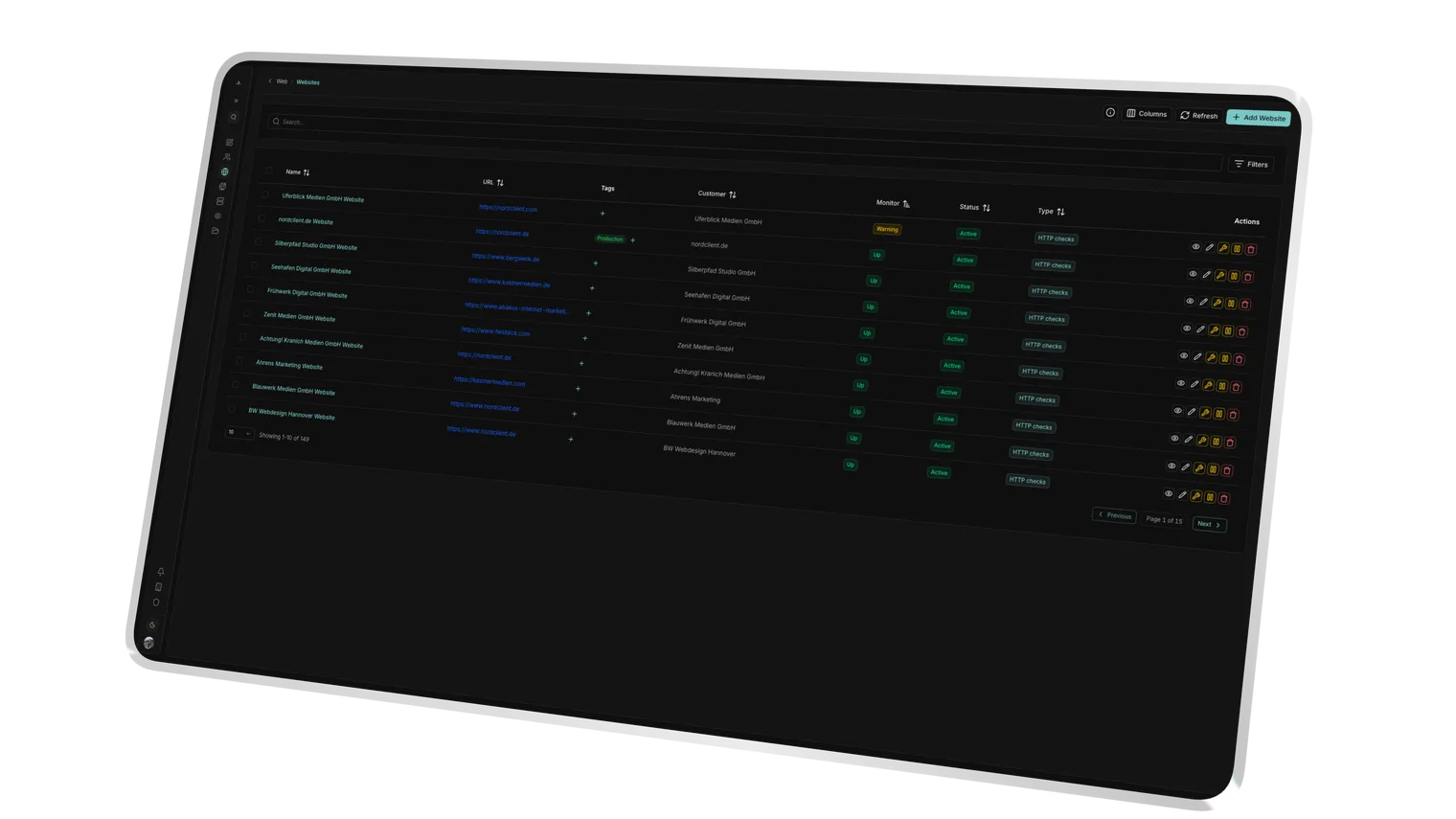
Fast is a feature. Slow is a ticket.
A page that loads in five seconds is online, and still losing customers. The response-time check measures TTFB and full load time, so you see performance drops before they cost UX and search rankings. You show the client not just "reachable," but "fast enough."
- Latency thresholds, so you spot drops early instead of waiting for the complaint.
- Deployment impact over time, so you can prove whether a release slowed the site.
- TTFB baselines, so you isolate server-side latency spikes under load instantly.
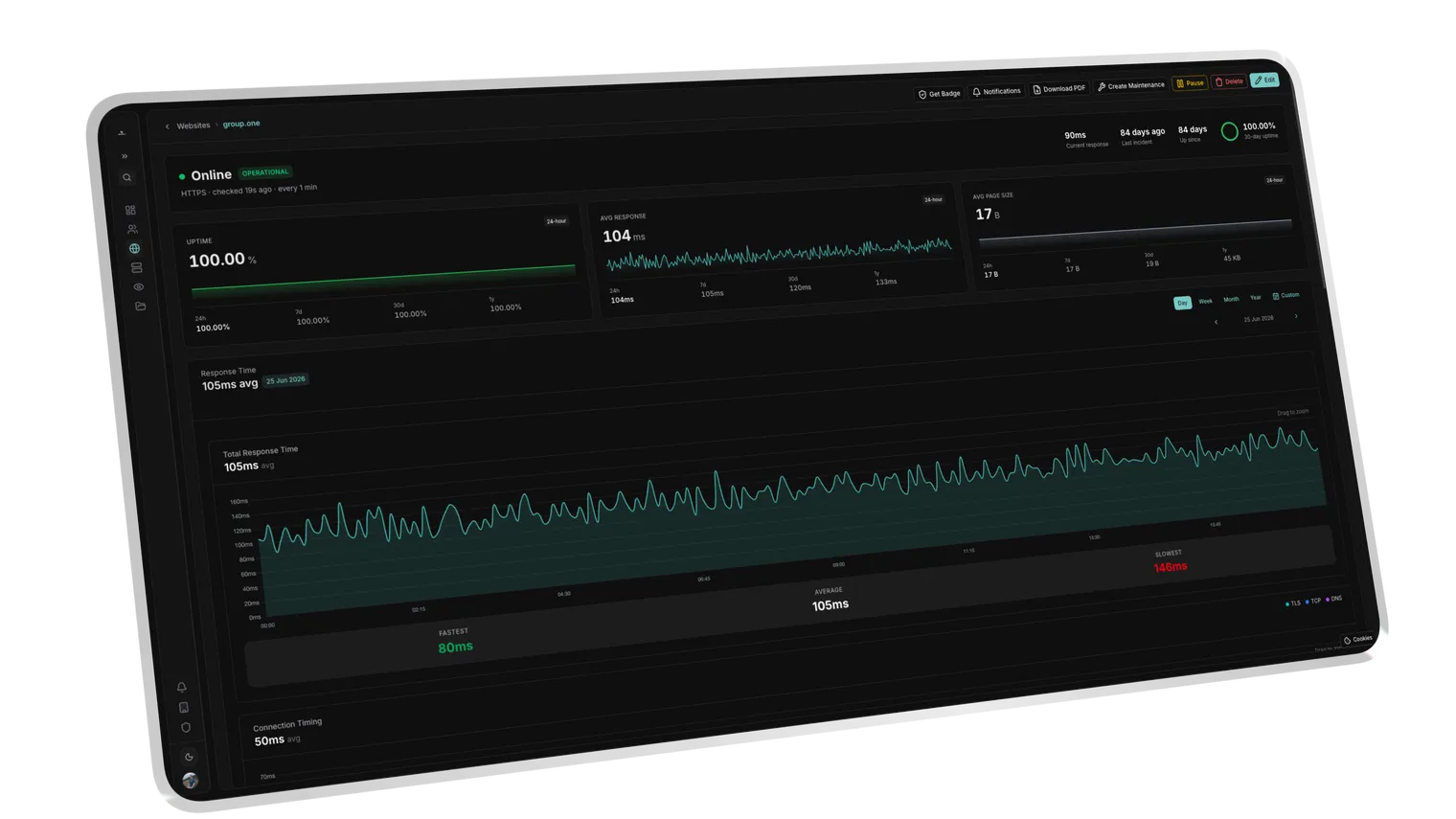
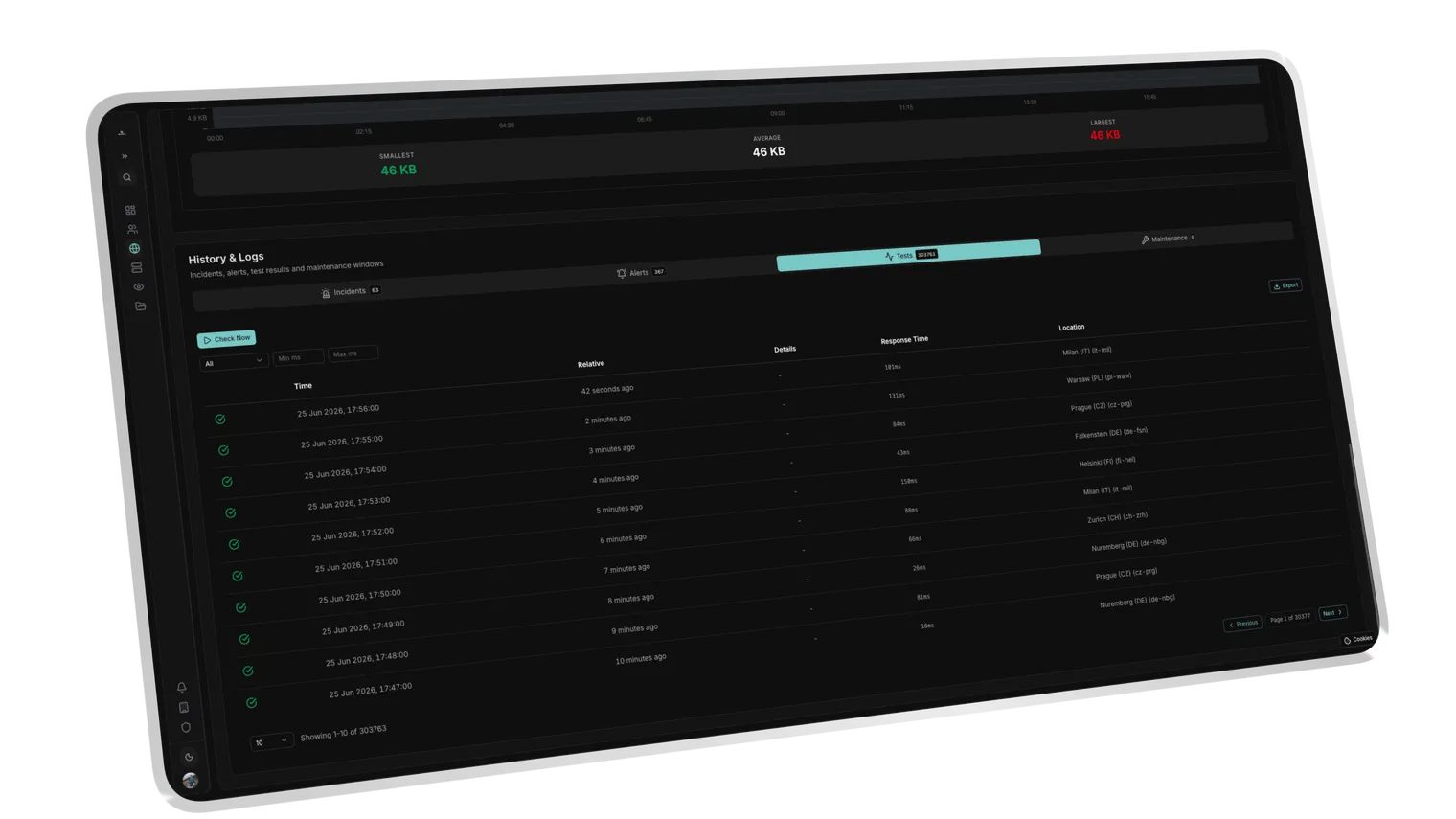
When the page suddenly goes empty, the size tells you first.
A partial database error, a defacement, bloated script ballast: the HTML payload betrays structural problems a 200 hides. The page-size check watches page volume against clear min and max bounds. You catch the break by the byte count before anyone sees it.
- "Min size" alerts, so empty renders and half database errors surface despite status 200.
- "Max size" alerts, so unoptimized uploads or code injections don't bloat the volume unnoticed.
- Strict payload limits, so page size stays in range and your SEO ranking doesn't suffer.
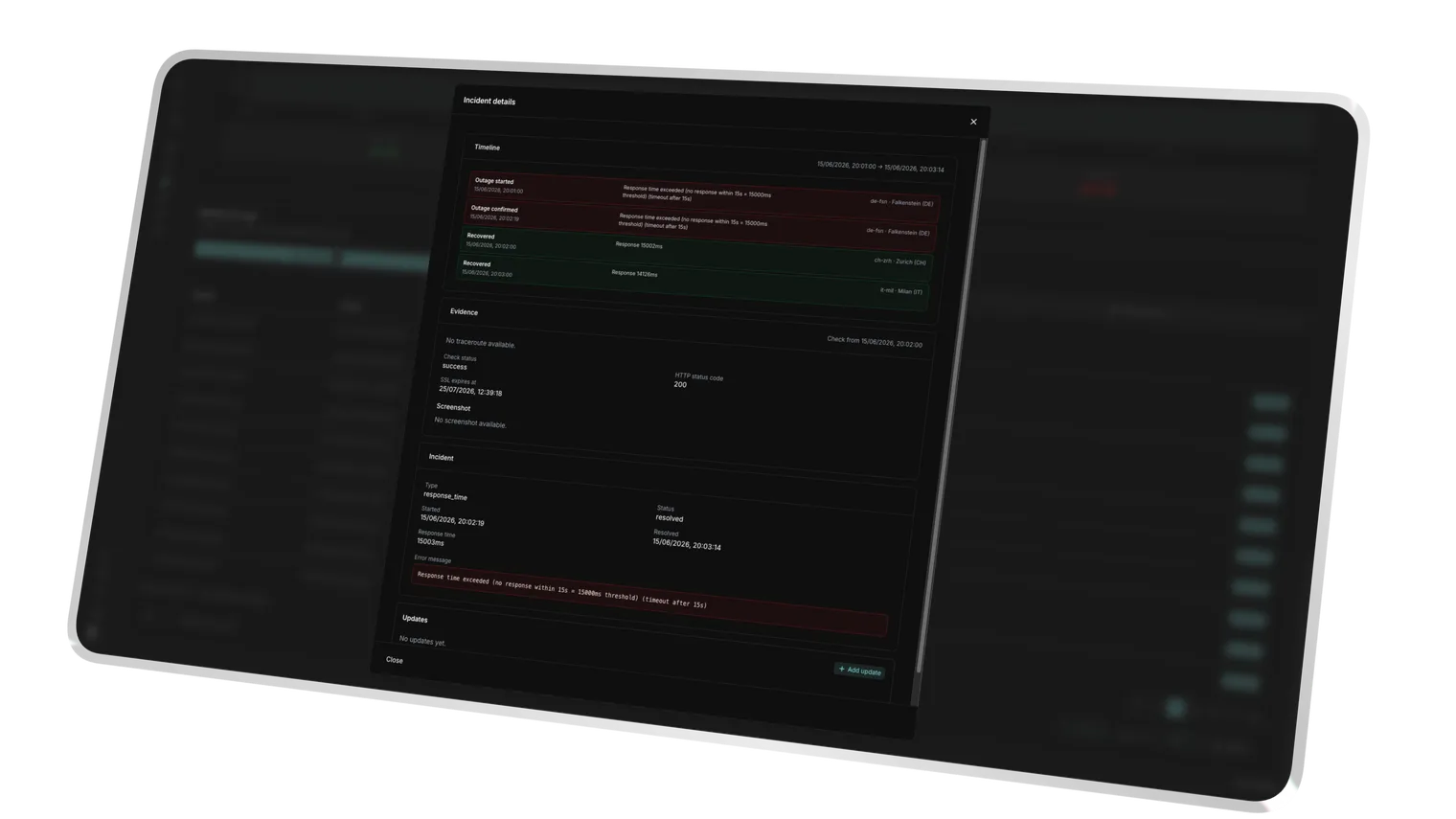
Every unencrypted request is a hole in your authority.
If an old HTTP URL doesn't route cleanly to HTTPS, you lose link authority and open a security gap. The HTTPS redirect check audits the routing continuously and confirms every request lands on the secured version. You keep the whole portfolio's TLS compliance clean.
- Routing validation of redirect codes, so 301/302 from HTTP to HTTPS land right and SEO authority holds.
- Enforced security with HSTS, so every redirect target is strictly HTTPS-compliant, with no loophole.
- Canonical hygiene, so link authority is preserved through technically correct redirects.
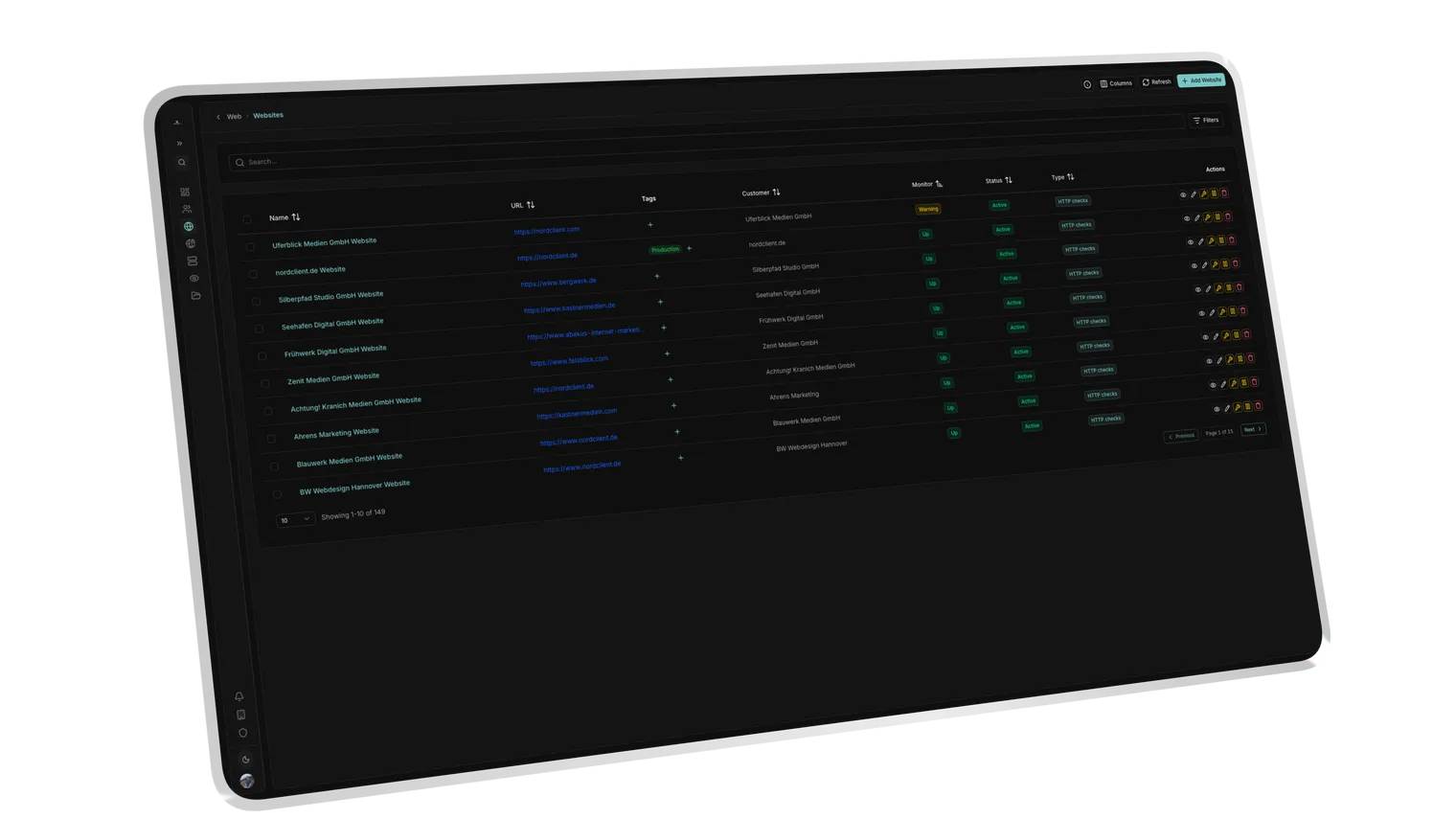
Success Kit
We don't just monitor. We help you sell.
Every Uptimeify subscription includes access to our Success Kit - a collection of battle-tested resources to turn your monitoring into a profit center.
Don't start from scratch. Use our SLA templates to define professional boundaries and liabilities with your clients.
Find the 'sweet spot' for your care plans. Calculate your margins based on check frequency, support hours, and infrastructure costs.
Powerpoint Templates that explain the importance of 24/7 monitoring to non-technical clients. Close more retainers with ease.
Learn how to use our automated reports to proactively communicate value every month - so your clients never ask, 'What am I actually paying for?'
Ready to turn monitoring into a profit center?
Claim your Success Kit and start scaling today.
Frequently Asked Questions
Eight check types in one dashboard: uptime, SSL, Playwright E2E, keyword/DOM, heartbeat, response time, page size and HTTPS redirect. You combine them freely per website, covering everything from a static marketing site to a complex checkout in one place, instead of stitching tools together.
Yes. That's exactly what the platform is built for. You manage hundreds of client sites multi-tenant in one dashboard, branded under your own name. That turns monitoring from a cost line into a recurring service you bill per client.
Polling runs from Frankfurt and other European nodes; processing runs on a European-only stack without US sub-processors. That minimizes third-country transfer risk and takes an entire compliance conversation off the table in B2B and public-sector pitches.
An uptime check tells you the server responds, not whether the page shows the right content, the checkout works, or the certificate is still valid tomorrow. Combining keyword, Playwright and SSL checks closes exactly the gaps where a page is "online" and still fails. You decide per website how deep to check.
Yes. You enter planned maintenance as a maintenance window, and alerting pauses for that period while monitoring keeps running in the background. Your client sees scheduled maintenance in the status history instead of an apparent outage.
Ready to secure your clients' entire portfolio?
One dashboard, eight check types, your brand. Set up your first monitor in minutes and show your clients that someone knew first.